

BLOG

Fine Art Connoisseur Magazine and The Promise of Spring
The November/December issue of Fine Art Connoisseur is on newsstands and in mailboxes now and features an article entitled, "The Enduring Appeal of Youth". In it, writer Max Gillies offers the reader a look at recent examples of contemporary artists who capture children in their paintings, sculptures, drawings, prints and other art forms. The pages display 26 images of art from some of the best and most recognized figurative artists in the country today.

T
he November/December issue of Fine Art Connoisseur is on newsstands and in mailboxes now and features an article entitled, "The Enduring Appeal of Youth". In it, writer Max Gillies offers the reader a look at recent examples of contemporary artists who capture children in their paintings, sculptures, drawings, prints and other art forms. The pages display 26 images of art from some of the best and most recognized figurative artists in the country today.
I am honored that the second image shown is "The Promise of Spring", an egg tempera piece that I painted this year and was sold through Robert Lange Studios in Charleston, SC to a North Carolina collector. This painting was the first figurative work that I completed in the egg tempera medium, a very exacting form of paint whose demands go beyond the rigors of color, edges, values, and drawing.

The concept for "The Promise of Spring" was developed from a request by the gallery to enter a piece that depicted the decay of man-made objects being overcome by nature. While I have observed many old structures in the rural area where I live falling into a decrepit state, I have also come to know many young children who demonstrate the new life that emerges from a loving, family environment. I chose to bring these two forces into one image to offer a vision of hope, of newness, of life overcoming decay.
I am elated that this painting quickly found a new home and with this publication, can be enjoyed by many more who love good art.
For more information on Fine Art Connoisseur magazine and to subscribe, go to their website, fineartconnoisseur.com.

C.M. Russell Museum to exhibit The End of Summer
The End of Summer is my newest egg tempera painting and represents one of the moments that I have come to treasure in our fleeting, fast-paced digital world.
Art should provide a way to lift you up and help you hold onto things that have meaning.
Painting to be Auctioned
The End of Summer, 2016, egg tempera on panel, 20 x 30 inches
The End of Summer is my newest egg tempera painting and represents one of the moments that I have come to treasure in our fleeting, fast-paced digital world.
Art should provide a way to lift you up and help you hold onto things that have meaning. Even ordinary things can be special. They can make us think about things that are deeper and help us regain perspective.
Appreciate the simple things. Savor the moments.
This painting was rendered in egg tempera, an ancient craft that was the standard medium for artists like Michelangelo. Every surviving panel painted by him is egg tempera. Oil replaced tempera as the principal medium used for creating artwork during the 15th century but its use has survived today due in part to the skill of dedicated iconographers throughout the world.
Egg tempera is valued for the intensity and radiance of colors, remaining beautiful for centuries. The artist uses natural ingredients, various rock and earth materials ground to fine powder, to which he adds water and egg yolk.
The End of Summer measures 20 x 30 inches and will be available for purchase at the Russell Event, an exhibit and fine art auction at the C.M. Russell Museum in Great Falls, Montana in March 2017.
“As one of 80 pieces of art being auctioned to raise funds for the support of the museum, I am honored that this painting was selected for the exhibit.”
As one of 80 pieces of art being auctioned to raise funds for the support of the museum, I am honored that this painting was selected for the exhibit.
Dedicated to Charles M. Russell and other significant Western artists, the museum holds over 3,000 pieces of fine art in its permanent collection in addition to documents, photographs, books, firearms, and collected pieces that represent the old west and Western art. It also includes the artist’s log cabin studio and gallery addition and encompasses 65,000 square feet of space for exhibition and education.
For more information, or to purchase this painting, visit the museum’s website, cmrussell.org.
How to Get Into the Final Four
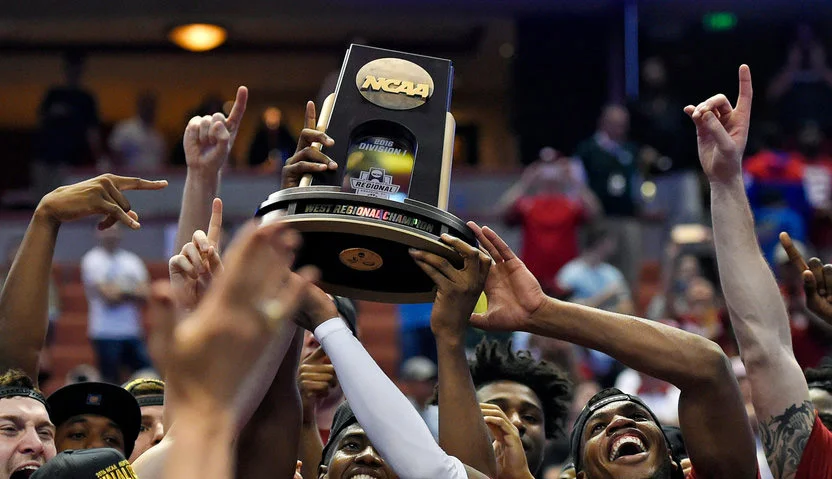
This weekend marks the end of the college basketball season with an event commonly known as the “Final Four.” Yeah, I am a big basketball fan and while my favorite baseball team waits to throw out the first pitch, I concentrate on this magical time also known as “March Madness.” The entire season winds down to this weekend tournament of four teams that have endured 30 plus games during the regular season,

This weekend marks the end of the college basketball season with an event commonly known as the “Final Four.” Yeah, I am a big basketball fan and while my favorite baseball team waits to throw out the first pitch, I concentrate on this magical time also known as “March Madness.” The entire season winds down to this weekend tournament of four teams that have endured 30 plus games during the regular season, a meaningless conference tournament, then the full-on NCAA post season bout that pits 64 teams (more or less) battling it out to end up with one champion.
It's a metaphorical sacrament in the American culture that garners more and more money and attention each year. But it has historical context that bolsters plenty of banter and stories of sports legends and college traditions so everyone has their pet theories about who is the best, who was the best, and who is the best of all time.
But one thing that has puzzled me year after year is the question, why are the teams in the Final Four nearly always from a select group of schools that have been there over and over?
In this year’s group, the coaches of these teams have been to the Final Four 17 times. Thats an average of 4 times each. Among these four coaches, they have 160 NCAA tournament wins. That's phenomenal. Altogether, these guys have accumulated 2,835 wins. Thats over 700 wins apiece. Do you realize how successful these men are? That means over the course of say, 25 years of coaching, they have averaged 28 wins per year or a winning percentage of about 88%.

Roy Williams
I don’t know about you, but that blows my mind. One of the most celebrated of these four men, University of North Carolina coach Roy Williams, has a remarkable record. He is the youngest coach to reach 700 wins. He is the only coach to take two different college teams to the Final Four FOUR times (he also did it with the University of Kansas, another basketball powerhouse program). But his success should be no surprise. Roy was trained by another of the most successful men in the sport, Dean Smith. Smith took his teams to 11 Final Four appearances during his career and won over 77% of the games he coached. That is a tradition of winning that was passed down.
So, how do you get into the Final Four? I’m sure there are a lot of sports pundits out there that can wax for hours on the subject and come up with a hundred different answers. But what does this mean for someone like me who just wants to win, to succeed in the career I have chosen, to rise above average and, at the end of my life not look back on failure?
I have landed on two important principles.
Number one: You have to be committed to winning.
The universities that hire these men to coach their basketball program have certainly developed a reputation for winning that pervades every part of their brand. And their success is effective to the extent that they maintain their commitment to it. Drag your feet on this mindset, and you will pay the price for generations to come. A major West Coast university that dominated college basketball in the 60’s and 70’s and set records for winning championships that will never be broken, is now paying the price.
As a personal attitude, you can apply it to business, relationships, finances, and your health. You have to want to win, not just be mediocre. You can determine that you will be a winner in whatever direction you are pursuing.

John Wooden
Number two: Learn from winning coaches.
Winning begets winning. The history of sports is replete with stories of a lowly player becoming an assistant coach and finally landing a head coaching job. Along the way, he (or she) was trained on how to win. They either learned from a successful mentor, a championship coach, or from one who did not know how to win, how to get their team into the Final Four. If you were a young player who had aspirations of coaching in a sport, you would be looking to learn from the best, from a coach that was a winner.
You can apply this in your personal life as well. We are easily influenced by those we choose to spend time with. In the book of Proverbs, Solomon wrote, “Whoever walks with the wise becomes wise, but the companion of fools will suffer harm.” Someone once said, “add up the intelligence of your five closest friends. Take the average, and that is what you will become.”
You can find good coaching in every walk of life, especially in the profession you have chosen. The key to “getting in the Final Four” is to find a winner to learn from. Maybe the coach you choose is not highly successful by financial standards, but has a wealth of knowledge to pass on, a wealth of success in relationships, a winning attitude when it comes to doing life.
You can also study the people in your profession who were winners but are no longer living. If I wanted to become a basketball coach, I would soak up everything I could find on John Wooden. You can read about their life, their technique, their attitude, their choices. Learning from winners does not always mean you can chat with them on the phone.
Getting in the Final Four is often the most respected accomplishment awarded a college basketball coach, even if he does not win the championship. Dean Smith only won 2 championships in his 36 years, but his reputation, his brand was that of a winner. John Wooden won 10, including seven in a row. He made it to the Final Four 12 times. He was a winner.
No matter what your direction in life, no matter what your career choice, learning from winners should be a consistent goal of your development, a determined choice in your dealings with others, a decided way to personal maturity. I am convinced you won’t make it to the Final Four unless you do.